
In today’s digital first world, data is not just an asset it’s the backbone of every business. From customer records to financial transactions, everything depends on reliable data storage.
However, disasters can strike at any moment. Whether it’s hardware failure, cyberattacks, or accidental deletion, data loss can cripple operations.
That’s where professional data recovery services come in. In this guide, you’ll learn how expert recovery solutions help businesses avoid catastrophic losses, restore critical information, and maintain continuity.
Table of contents
- Why Data Loss Is a Serious Business Threat
- What Is Professional Data Recovery?
- How Professional Data Recovery Saves Businesses
- Why DIY Data Recovery Is Risky
- The Data Recovery Process Explained
- Role of Creative IT in Professional Data Recovery
- Preventing Data Loss: Best Practices
- Industries That Benefit Most from Data Recovery
- Signs You Need Professional Data Recovery
- Future of Data Recovery
- Conclusion
- FAQ’s
Why Data Loss Is a Serious Business Threat
Data loss is not just an IT issue
it’s a business risk. In fact, companies that lose critical data often struggle to recover financially and operationally.
Common Causes of Data Loss
Businesses face multiple threats, including:
- Hardware failures (HDD/SSD crashes)
- Human errors (accidental deletion or formatting)
- Cyberattacks (ransomware, malware)
- Natural disasters (floods, fires)
- Power failures and system crashes
As a result, even a small incident can lead to significant downtime.
The Real Cost of Data Loss
Data loss impacts businesses in several ways:
| Impact Area | Consequence |
|---|---|
| Financial Loss | Revenue drops due to downtime |
| Reputation Damage | Loss of customer trust |
| Legal Issues | Compliance violations and penalties |
| Operational Disruption | Halted workflows and productivity decline |
Therefore, prevention is important but recovery is essential.
What Is Professional Data Recovery?
Professional data recovery is the process of retrieving lost, deleted, or inaccessible data using advanced tools and techniques. Unlike DIY methods, it involves specialized expertise and controlled environments.
Key Features of Professional Data Recovery
- Advanced recovery tools and software
- Cleanroom environments for hardware repair
- Expertise in handling complex storage systems
- Secure and confidential data handling
Because of these advantages, businesses can recover data even from severely damaged devices.
How Professional Data Recovery Saves Businesses
Now let’s explore how these services protect businesses from disaster.
1. Minimizes Downtime
First of all, downtime is expensive. However, professional recovery services work quickly to restore data, allowing businesses to resume operations faster.
Moreover, experts can often recover data that seems permanently lost, reducing the need for system rebuilds.
2. Recovers Data from Complex Failures
Not all data loss is simple. For example:
- RAID server failures
- Corrupted databases
- SSD firmware issues
In such cases, professional services use advanced techniques to reconstruct data structures. As a result, businesses regain access to critical files that DIY tools cannot recover.
3. Protects Against Cyber Threats
Cyberattacks like ransomware are increasing rapidly. While prevention tools are helpful, recovery is the last line of defense.
Professional recovery services:
- Remove malicious code
- Restore clean backups
- Recover encrypted or damaged files
Therefore, businesses can bounce back even after a cyber incident.
4. Ensures Data Security and Confidentiality
Data security is a top concern. Fortunately, professional services follow strict protocols:
- Secure data handling
- Confidential recovery processes
- Compliance with industry standards
This is especially important for industries like healthcare, finance, and e-commerce.
5. Supports Business Continuity
Business continuity depends on data availability. Without it, operations stop.
However, with professional recovery:
- Critical systems are restored quickly
- Workflow disruptions are minimized
- Long-term damage is prevented
As a result, companies maintain stability even during crises.
Why DIY Data Recovery Is Risky
Many businesses attempt to recover data themselves. However, this approach often causes more harm than good.
Common DIY Mistakes
- Overwriting lost data
- Using unreliable software
- Opening hardware without proper tools
- Ignoring underlying issues
Consequently, data becomes permanently unrecoverable.
Professional vs DIY Recovery
| Factor | DIY Recovery | Professional Recovery |
|---|---|---|
| Success Rate | Low | High |
| Risk of Damage | High | Minimal |
| Tools Used | Basic software | Advanced technology |
| Data Security | Not guaranteed | Fully secure |
Clearly, professional services offer a safer and more reliable solution.
The Data Recovery Process Explained
Understanding the process helps businesses make informed decisions.
Step 1: Initial Assessment
Experts evaluate the storage device to determine:
- Type of data loss
- Severity of damage
- Recovery feasibility
Step 2: Diagnosis and Strategy
Next, a recovery plan is created. This includes selecting tools and techniques suitable for the situation.
Step 3: Data Recovery Execution
Technicians perform the recovery using:
- Specialized software
- Hardware repairs (if needed)
- Cleanroom environments
Step 4: Data Verification
Recovered data is tested to ensure:
- Accuracy
- Completeness
- Usability
Step 5: Secure Delivery
Finally, data is delivered securely to the client.
Role of Creative IT in Professional Data Recovery
When it comes to reliable data recovery solutions, Creative IT stands out as a trusted partner for businesses.
Why Choose Creative IT?
- Experienced data recovery specialists
- Advanced recovery tools and infrastructure
- Fast turnaround time
- High success rate
- Affordable and transparent pricing
In addition, Creative IT understands the urgency of data loss. Therefore, they provide quick and effective solutions tailored to business needs.
Preventing Data Loss: Best Practices
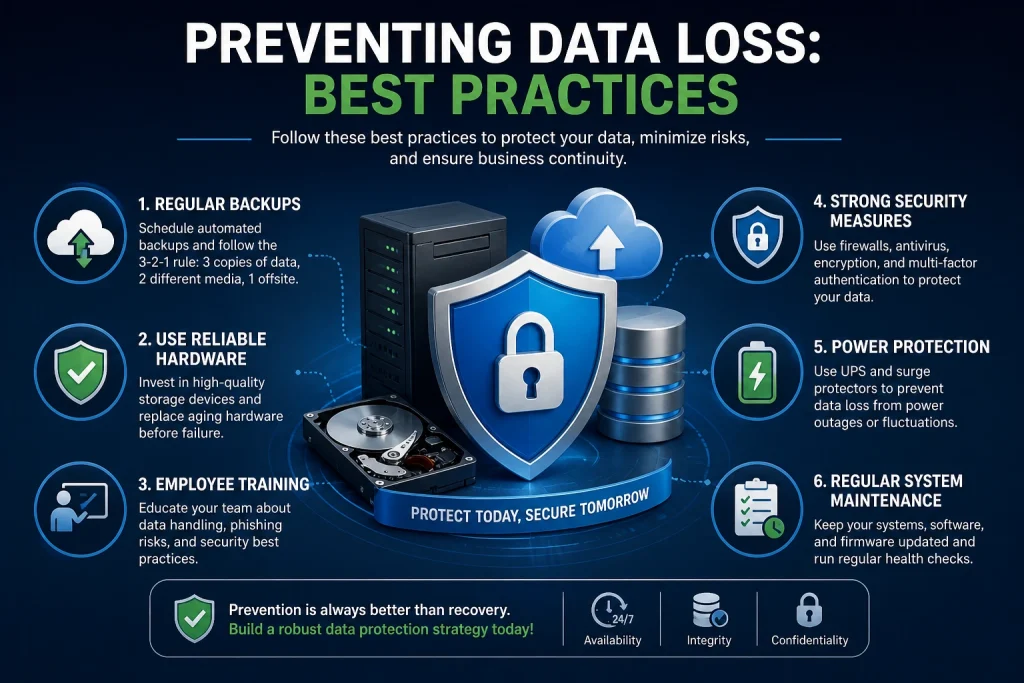
Although recovery is essential, prevention is equally important.
Key Preventive Measures
- Regular Backups
Always maintain updated backups (cloud + local). - Use Reliable Hardware
Invest in high quality storage devices. - Implement Cybersecurity Measures
Use firewalls, antivirus, and encryption. - Employee Training
Educate staff to avoid human errors. - Power Protection Systems
Use UPS to prevent sudden shutdowns.
By following these practices, businesses can reduce the risk of data loss significantly.
Industries That Benefit Most from Data Recovery
Professional data recovery is valuable across various industries:
1. Healthcare
- Patient records must be preserved
- Compliance requirements are strict
2. Finance
- Financial data is highly sensitive
- Downtime can lead to huge losses
3. E-commerce
- Customer data and transactions are critical
- Data loss affects sales and trust
4. IT & SaaS Companies
- Data is the core product
- Recovery ensures service continuity
Signs You Need Professional Data Recovery
Recognizing early signs can prevent permanent data loss.
Warning Signs
- Strange noises from hard drive
- Slow system performance
- Files disappearing or becoming corrupted
- System not recognizing storage device
If you notice any of these, stop using the device immediately and consult professionals.
Future of Data Recovery
Technology is evolving rapidly. As a result, data recovery is becoming more advanced.
Emerging Trends
- AI-powered recovery tools
- Cloud-based recovery solutions
- Faster recovery techniques
- Enhanced data security protocols
Therefore, businesses can expect even more efficient solutions in the future.
Conclusion
Data loss can be devastating. However, professional data recovery services provide a reliable safety net. From minimizing downtime to restoring critical information, these services help businesses recover quickly and effectively.
Instead of risking permanent loss with DIY methods, it’s always better to trust experts like Creative IT. With the right support, businesses can turn potential disasters into manageable challenges.
Read More: Disaster Recovery Planning: How Irish Businesses Stay Online During IT Failures
FAQ’s
Professional services often have a success rate of 80% to 95%, depending on the severity of the damage.
It usually takes 24 hours to several days, depending on complexity.
Costs vary based on the issue. However, it is often more affordable than the losses caused by data loss.
Yes, professionals can recover data even from physically damaged drives using specialized tools.
Yes, reputable services like Creative IT ensure complete confidentiality and security.
Yes, immediately stop using the device to prevent overwriting data